What are the Warning Signs of an Electrical Fire? How to Prevent One?
Key Takeaways:
- Persistent burning smells or buzzing sounds may signal wiring problems—don’t ignore them.
- Discolored or warm outlets are serious warning signs.
- Flickering or dimming lights can indicate faulty wiring or overloaded circuits.
- Regular professional inspections help catch hazards early.
- Only use extension cords temporarily, not as permanent solutions.
- Upgrade old wiring and panels for improved safety.
- Always call a licensed electrician for repairs or upgrades.
Electricity makes life easier, but it also brings real risks.
A report from the National Fire Protection Association shows that electrical component failures or problems cause roughly 13% of fires in US homes. Here in Tallahassee and across the Florida Panhandle, the blend of summer storms, aging buildings, and growing power needs raises the stakes even higher for homeowners, contractors, and business owners alike.
Most electrical fires start slowly. They give off clues that many people overlook until it’s too late. That’s why I believe it’s so important to know exactly what to watch for (and how to act) if you spot something that doesn’t seem right.
With decades of experience across all kinds of jobs from small home repairs to full commercial builds, I’ve seen how early action, trust, and teamwork can prevent disaster and keep families, workers, and properties safe. Let’s discuss the common warning signs and how to avoid bigger problems.
Why Do Electrical Fires Happen?
Electrical fires can start for several different reasons, from old wiring and faulty outlets to bad appliances and more. Understanding how an electrical fire can start is the first step toward prevention. Many people think electrical fires are rare, but they typically result from day-to-day problems that build up over time.
1) Old Wiring and Overloaded Circuits
Our homes and commercial buildings in Tallahassee range from brand-new to over a century old. Older properties commonly rely on their original wiring. As time passes, wires can break down, wiring insulation can deteriorate, and fall out of compliance with newer safety codes. Even more, the electric loads demanded by today’s devices (think ACs, computers, and kitchen gadgets) can overwhelm circuits that were never originally designed for them.
In homes or businesses that experience frequent breaker trips, slow-to-reset fuses, or outlets that only accept the old two-prong plugs, old wiring is a very common culprit. Overloaded circuits from running too many appliances or machines on one line can get hot and dangerous very quickly.
2) Faulty Outlets and Appliances
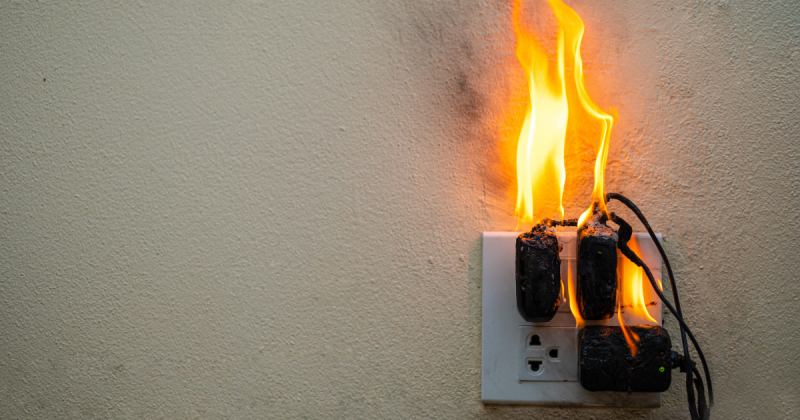
Physical wear can weaken wall outlets, power strips, and light switches. Cracked or scorched faceplates are not just ugly; they’re warning signs. Faulty plugs or damaged appliance cords can spark or overheat during everyday use.
This isn’t just a problem in older homes. Even new construction can run into trouble if the original installation cuts safety corners or if appliances develop faults over time. This is a problem we will likely see grow in the future as building costs continue to rise.
3) Improper Extension Cord Use
Extension cords are meant for temporary fixes, not permanent setups. Draping a cord across a room or plugging in a power-hungry device for weeks on end can cause cords to heat up and fail. Running cords under rugs or behind furniture creates hidden fire traps.
Commercial properties, like offices and restaurants, are just as likely to lean on extension cords when growth outpaces wiring upgrades.
Signs of Electrical Fire Hazards
Recognizing the signs of potential trouble can make all the difference. In both homes and businesses, electrical fires usually give off warning signs before a small issue becomes a serious emergency.
1) Burning Smell from Extension Cords or Outlet
A faint burning odor (sometimes like melting plastic) typically comes from overheated wiring or cords. You might notice the smell after running a device for a while, like a space heater or microwave. Never ignore this.
If you can’t identify the source, unplug devices one at a time until the smell disappears, and avoid using the same cord or outlet in the future.
2) Discoloration or Warm Outlets
Brown, black, or yellow stains around outlets usually mean trouble.
If an outlet or switch feels warm to the touch, especially when not in use, energy could be leaking or arcing inside. This is a leading cause of home electrical fires. In businesses, check outlets near break rooms or equipment, since heavy use makes them more likely to fail.
3) Flickering or Dimming Lights
Flickering, buzzing, or dimming lights are easy to dismiss as only “annoying.”
In fact, these may signal failing wiring or overloaded circuits. If changing a bulb doesn’t fix the problem, the cause could be further back in the circuit or panel. This is especially important after major storms, which are common during Tallahassee summers and can disturb connections.
What Are the Signs of an Electrical Fire in Walls?
Not all warning signs are visible. Some problems hide behind drywall or inside ceilings. Unexplained hot spots on your walls or a persistent burning smell with no clear source can indicate hidden electrical issues.
1) Smell of Burning or Melting
A persistent burning odor with no clear source likely means wires are overheating behind walls or above ceilings. Some describe the smell as fishy, sharp, or chemical-like. If the smell grows stronger when certain outlets or appliances are in use, that’s a big clue.
2) Scorch Marks or Buzzing Sounds
Evidence of charring around outlets, switches, or electrical panels points to recent arcing or short circuits. Also, pay attention to odd sounds, such as buzzing, crackling, or popping, near electrical boxes. This means electrical flow isn’t smooth and safe, and the risk of fire is very real.
3) Frequent Circuit Breaker Trips
A breaker that trips now and then during heavy storms may not be alarming. But if you must reset a breaker more than once or twice a month (or it won’t stay reset), it means there is a persistent problem. Don’t just flip the switch and forget it; call for inspection.
Immediate Actions if You Notice Warning Signs
If you spot a warning sign of an electrical fire, your goal is to minimize risk until a professional can fix the problem. Safety comes first; never take unnecessary chances.
1) Shutting Off Power Safely
Unplug all devices from the suspicious outlet or circuit.
If you see smoke, sparks, or feel heat, shut off the power at your breaker box right away. Most main panels are clearly labeled, but if you are unsure, turn off the main switch for the whole property. This simple step can stop an electrical fire in its tracks.
2) When to Call Emergency Services
If there is visible smoke, fire, or a strong burning smell, get everyone out of the building and call 911 right away.
Don’t try to put out an electrical fire with water. Use a Class C fire extinguisher if it’s safe, and you know how. If there’s any doubt, let the fire department handle it; they have the proper tools and training.
3) Evacuating Occupants
Clear everyone out calmly, especially children, older adults, or anyone who may need help. Even a small electrical fire can fill a home or business with toxic smoke in minutes. Keep doors closed behind you to slow the fire.
How to Prevent Electrical Fires
Prevention starts with basic care and regular checks, whether you own a house in Tallahassee, run a restaurant downtown, or manage an apartment complex.
1) Scheduling Regular Electrical Inspections
Professional inspections are the first line of defense. For Tallahassee homes, experts recommend at least once every five to ten years, or after a major remodel. Commercial properties should have annual inspections. A licensed electrician can spot worn wires, loose fittings, overloaded circuits, and code violations before they cause trouble.
2) Upgrading Old Wiring and Panels
If your property still relies on knob-and-tube wiring, fuse boxes, or panels more than 40 years old, it’s time to upgrade. Modern wiring is safer, more efficient, and less likely to overheat. Upgrades may seem costly up front, but they save lives and property in the long run. If your building regularly trips breakers or feels underpowered, that’s a sign that upgrades are overdue.
3) Safe Use of Extension Cords
Only use extension cords for short-term, light-duty needs. Keep in mind, extension cords are not substitutes for permanent wiring or additional outlets.
- Always choose cords rated for the load they will carry.
- Never daisy-chain multiple extensions or run cords under carpets, where heat can build up unseen.
- Make sure cords are visible, not a tripping hazard, and unplug them when not in use.
- Inspect cords regularly for fraying or damage, and replace them immediately if you notice any defects.
When to Contact a Professional
Some electrical problems can’t wait, and some jobs should never be handled without the right training, tools, and insurance.
1) Importance of Licensed Electricians
Only licensed electricians should repair, upgrade, or install any part of your electrical system. This isn’t just about skill; it’s about trust, accountability, and the peace of mind that comes from knowing you and your property are safe.
2) Electrical Code Compliance Checks
Building codes exist for a reason: they keep people safe. Whether you’re planning a renovation, building out commercial space, or converting a garage, you need a code-compliant electrical system.
Licensed professionals stay up to date on the latest local and national codes, which have evolved significantly in recent years. This extra step helps protect your investment and ensure your insurance remains valid.
3) Maintenance for Safety
Routine maintenance, like checking outlets, testing GFCIs (Ground Fault Circuit Interrupters), and cleaning panels, goes a long way. Schedule regular walks through your property to spot frayed cords, damaged outlets, and flickering lights.
For businesses, develop a yearly maintenance plan to keep everything up to snuff and avoid unexpected downtime.
Throughout all my years providing electrical services right here in Tallahassee, one thing has stayed true: nothing matters more than the trust and safety of the people I serve. From rewiring a front porch to leading walk-throughs of major new construction projects, my team and I put our experience, attention to detail, and care into every job.
Take the First Step to Preventing Fires
Catching warning signs early doesn’t just prevent disaster; it’s a way of showing respect for those who work, live, or gather in your space. Whether you’re a first-time homeowner, a seasoned contractor, or a business owner balancing safety and budgets, the steps you take today can protect lives and property for years to come.
If you’ve spotted any of these signs, or if you’re overdue for an inspection, don’t wait. Your peace of mind is worth a call to a licensed, trusted professional with deep roots in our Tallahassee community. As we like to say, “If it’s electrical, it’s Meeks.”
Get in touch with our team today to learn more about electrical safety.
Frequently Asked Questions About Electrical Fires
1) How long does it take for an electrical fire to start?
An electrical fire can start in seconds if wires short-circuit or are exposed to sparks. However, some electrical fires smolder for hours or even days before igniting into visible flames. The timeline depends on factors like wiring condition, load, and surrounding materials.
2) What are the warning signs of an electrical fire?
Warning signs include persistent burning smells, discolored or warm outlets, flickering lights, buzzing or crackling sounds, and frequent circuit breaker trips. If you notice these symptoms, especially in combination, turn off the power to the area and contact a licensed electrician immediately for inspection.
3) Where do most electrical fires start in a house?
Most electrical fires start in bedrooms, living rooms, or areas with high electricity usage, like kitchens. Faulty outlets, old wiring, overloaded extension cords, and malfunctioning appliances are common sources. Unattended or hidden wiring issues behind walls or ceilings also pose significant risks.
4) Will a breaker trip before a fire starts?
A properly functioning circuit breaker is designed to trip and cut off electrical flow before wiring overheats enough to start a fire. However, if a breaker is faulty, incorrectly sized, or bypassed, it may not trip in time, increasing the risk of fire.
5) Can an electrical fire start if nothing is plugged in?
Yes, electrical fires can start even if nothing is plugged in. Faulty wiring, loose connections, or damaged outlets inside walls can overheat and ignite combustibles. Deteriorating insulation or rodent damage to wires are common causes of these types of hidden electrical fires.