What to Expect During a Commercial Electrical Inspection in Tallahassee
Key Takeaways:
- Commercial electrical inspections in Tallahassee ensure safety, efficiency, and compliance with the Florida Building Code and NEC standards.
- Inspections are required for new construction, renovations, upgrades, property transfers, insurance, and certain businesses on an annual basis.
- Facilities with heavy electrical loads or stringent safety requirements, such as those in healthcare, industrial settings, and data centers, often require annual inspections.
- Preparing for an inspection includes completing electrical work, repairing hazards, compiling documentation, and ensuring system access.
Suppose you own or manage a retail store, restaurant, office, factory, or other commercial operation in Tallahassee. In that case, you want to ensure that your building’s electrical system is operating efficiently and safely. From an efficiency standpoint, any electrical breakdowns can cause significant disruptions to the company’s workflow, taking a bite out of the bottom line. Concerning safety, it’s essential to protect workers, customers, and anyone visiting the business premises from electrical hazards, such as shocks and fires.
The best way a Tallahassee business can help ensure the efficiency and safety of its electrical system is to conduct periodic commercial electrical inspections. So let’s take a closer look at what you can expect from a commercial electrical inspection in Tallahassee.
Regulatory Reasons for a Commercial Electrical Inspection
The Florida Building Code requires commercial buildings to undergo electrical inspections under several distinct scenarios. Florida’s Code incorporates the National Electrical Code (NEC) as its standard for electrical safety. It uses these inspections to ensure compliance with state and local regulations, thereby preventing hazards such as fires, shocks, or system failures in offices, retail spaces, warehouses, industrial facilities, and other commercial buildings. The Code typically requires commercial electrical inspections for:
- New construction.
- Major renovations.
- Electrical service upgrades and additions.
- Insurance and property transfer purposes.
- Annual compliance checks.
Commercial operations with high electrical demands, critical safety requirements, or regulatory oversight are generally required to undergo annual compliance checks to ensure ongoing safety and compliance with the Code. Commercial buildings that typically require annual compliance checks include:
- Industrial facilities
- Healthcare facilities
- Data centers
- Office buildings
- Commercial retail operations
- Facilities with hazardous operations
- Multi-family residential complexes (the commercial portions)
Other Reasons for a Commercial Electrical Inspection
Even if not mandated by Florida’s Building Code or other regulations, businesses should periodically schedule a commercial electrical inspection to ensure electrical safety and system efficiency. The frequency of such inspections depends on the size, complexity, and age of the business operation’s electrical system. However, inspections every one to three years are advisable for most commercial buildings. Benefits of periodic commercial electrical inspections include:
- Identify potential hazards, such as faulty wiring, overloaded circuits, or outdated equipment, to reduce the risk of electrical shocks, fires, or equipment damage.
- Expose and address minor issues before they escalate into more significant problems, which can result in costly repairs or downtime.
- Reduce insurance premiums and minimize liability in the event of electrical-related accidents.
- Identify electrical inefficiencies, which can help the business save on energy costs.
Preparing for Your Commercial Electrical Inspection
There are several steps you can take to prepare your business facilities for a commercial electrical inspection, which can help prevent delays or inspection failures. For starters, if the inspection involves new construction, renovations, or electrical upgrades, make sure the work has been completed. Other steps you should take include:
- Repair any obvious hazards, such as exposed wiring or overloaded circuits, before the inspection.
- Compile any related documentation, including plans, permits, and any previous electrical inspection reports.
- Ensure all facility electrical components are accessible, with clear pathways and working room around panels, wiring, and any electrical equipment.
- Provide employees, other occupants, and potential visitors with advance notice of the impending inspection, and coordinate operational shutdowns as necessary for the inspection.
- If the inspection will include infrared/thermal scanning of transformers, motors, or other substantial electrical equipment, power on all of the facility’s systems under normal load.
What to Expect During the Inspection
A commercial electrical inspection can last between one and four hours, depending on the facility’s size and the complexity of its electrical system. A small office might take an hour or so, while a large factory might take four hours or more.
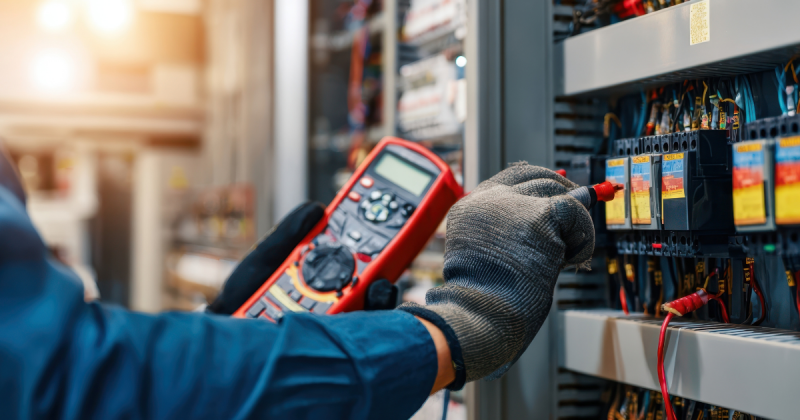
When the electrical inspector arrives, they typically first review the documentation and discuss the electrical system with the contractor, business owner, and/or anyone most familiar with the facility’s electrical system. The majority of the inspection involves a visual and hands-on assessment of all electrical installations, using tools such as multimeters to check voltages and infrared cameras to detect heat. Inspectors also conduct functional testing of equipment, such as ground fault continuity, and photograph key electrical components, noting their findings on a standard inspection form.
While a commercial electrical inspection is primarily concerned with ensuring that the electrical system complies with building codes and related NEC standards, it inherently uncovers any safety issues and electrical inefficiencies. Electrical components assessed during an inspection include:
- Service panels
- Wiring and conduit
- Outlets, switches, and fixtures
- Circuits and load calculations
- Special systems such as generators, surge protection, EV chargers, signage, fire alarms, and other electrical safety equipment.
- Infrared/thermal scanning of motors and transformers, as needed.
Electrical inspections typically conclude with a walk-through and a debrief on the inspector’s findings, followed by a written report. Inspectors typically provide the same-day notice that the facility’s electrical system has passed inspection. When a facility fails an inspection or requires electrical corrections, the detailed inspection report will list outstanding issues and provide deadlines for resolving them, which are typically 10 to 30 days. You can schedule a follow-up inspection after your commercial electrician has corrected the problems.
Turn to Meeks for Your Commercial Electrical Service Needs
With more than 45 years of helping Tallahassee-area business owners power up their commercial operations with outstanding electrical installations, service, and maintenance, trust in Meeks to ensure that your facility’s electrical system passes inspection with flying colors. For all your company’s commercial electrical system needs, you can contact Meeks Electrical Services in Tallahassee at 850-575-3201.
FAQs: Commercial Electrical Inspections in Tallahassee
Q: What is a commercial electrical inspection in Tallahassee, and when is it required?
A: Commercial electrical inspections in Tallahassee ensure electrical systems in business operations comply with the Florida Building Code and the National Electrical Code. State and local regulations require it for new construction, major renovations, electrical upgrades, and, for some larger operations, annual compliance checks.
Q: Which Tallahassee businesses need annual commercial electrical inspections?
A: Businesses with facilities requiring high electrical loads, with critical safety issues, and/or under regulatory oversight typically require annual commercial electrical inspections. Examples include industrial facilities, healthcare centers, data centers, office buildings, and operations using hazardous materials.
Q: What does a commercial electrical inspector check in Tallahassee?
A: Commercial electrical inspectors in Tallahassee use a visual and hands-on approach to inspections, with assistance from tools like multimeters and infrared cameras, to inspect service panels, wiring, conduits, switches, grounding, load calculations, motors, transformers, and other electrical equipment as warranted.
Q: How do I prepare for a commercial electrical inspection in Tallahassee?
A: Complete all permitted electrical work, repair visible hazards, compile all relevant electrical system documentation, ensure full electrical system access, and power on all systems under normal load.
Q: What happens if my business fails a commercial electrical inspection in Tallahassee?
A: If you fail a commercial electrical inspection in Tallahassee, your inspector will submit a report to you that details all outstanding issues, with a 10- to 30-day deadline for correcting them. Once your commercial electrician has resolved these issues, you can reschedule a follow-up inspection.